Setting & Infrastructure
|
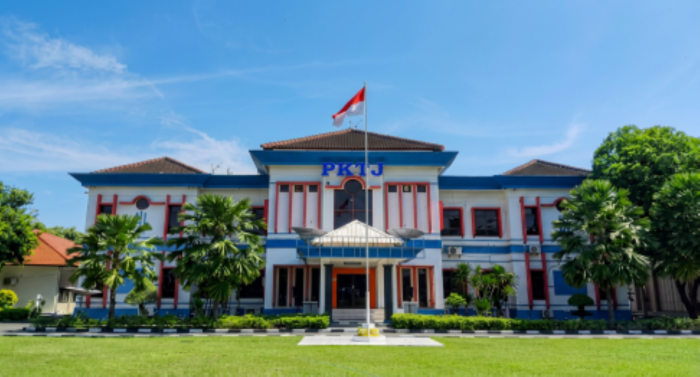 |
Pengelolaan tata ruang kampus, ruang terbuka hijau, bangunan ramah lingkungan, dan fasilitas pendukung keberlanjutan.
|
- Type of higher education institution : Specialized higher education institution
- Climate : Tropical Wet and Dry
- Number of campus sites : 2
- Campus setting : Urban
- Total campus area (m2) : 170,852.10
- Total campus ground floor area of buildings (m2) : 40,231
- Total campus buildings area (m2) : 94572
- The ratio of open space area to total area : ((1.5-1.6)/1.5) x 100%
- Total area on campus covered in forest vegetation used for research, teaching, and/or community engagement : 3,814.61
- Total area on campus covered in planted vegetation (please provide total area in square meters) : 116,401
- Total number of regular students (part time and full time) : 784
- Total number of online students (part time and full time)
- Total number of academic and administrative staff : 200
- The total open space area divided by total campus population : ((1.5-1.6)/(1.11+1.13))
- Campus facilities for persons with disabilities, special needs, and/or maternity care : Facilities exist in all buildings and are fully operated
- Security and safety facilities : Security and safety infrastructure (CCTV, emergency hotline/button) available and fully function
- Health infrastructure to support the well-being of students, academic staff, and administrative staff :Health infrastructure (first aid, emergency room, clinic and certified personnelavailable
- Conservation of flora, fauna, wildlife, and/or genetic resources secured in medium- or long-term conservation facilities : Conservation program is 1%-25% implemented
- Impact of Setting and Infrastructure programs in supporting the Sustainable Development Goals (SDGs) : Very high impact (supporting 14–17 SDGs)
|
Energy & Climate Change
|
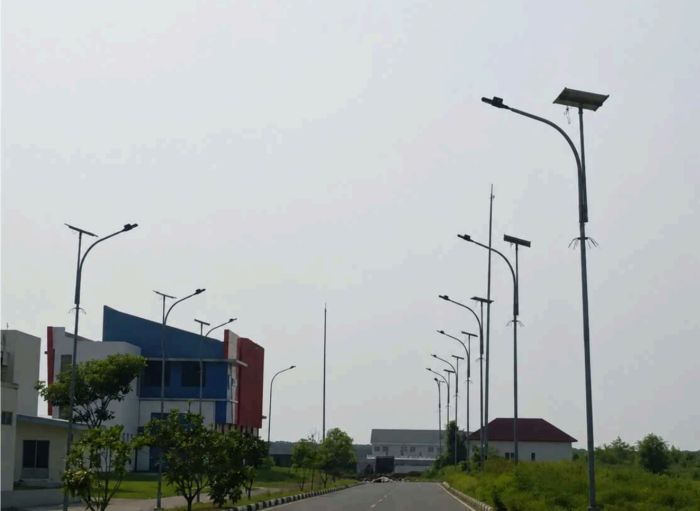 |
Upaya efisiensi energi, penggunaan energi terbarukan, serta mitigasi dan adaptasi perubahan iklim.
|
- Use of energy-efficient appliances : > 75%
- Total campus smart building area (m2) : 59984
- Smart building implementation: percentage of the total smart-building floor area to the total building floor area, including smart and non-smart buildings : ((2.2/1.7) x 100%)
- Number of renewable energy sources on campus, such as solar power, biodiesel, wind power, etc. : 1 source
- Renewable energy sources and their amount of the energy produced (in kilowatt-hour) : Solar Power (11)
- Electricity usage per year, in kilowatt-hours (kWh) : 1249701
- The total electricity usage divided by total campus population (kWh per person) : ((2.6)/(1.11+1.13))
- The ratio of renewable energy production divided by total energy usage per year : <= 0.5%
- Elements of green building implementation as reflected in all buildings : > 3 elements
- Greenhouse gas emission reduction program : Program(s) aims to reduce two out of three scopes emissions (Scope 1 and 2 or Scope 1 and 3 or Scope 2 and 3)
- Total carbon footprint, measured as CO2 emissions in the last 12 months, in metric tons : 2.398936
- The total carbon footprint divided by total campus population (metric tons per person) : ((2.11)/(1.11+1.13))
- The number of innovative program(s) in Energy and Climate Change : 2 programs
- Impactful university program(s) on climate change : Training, educational materials, seminars/conferences, and activities are implemented with surrounding communities at the local level.
- Impact of Energy and Climate Change programs in supporting the Sustainable Development Goals (SDGs) : Moderate impact (supporting 3–5 SDGs)
|
Waste
|
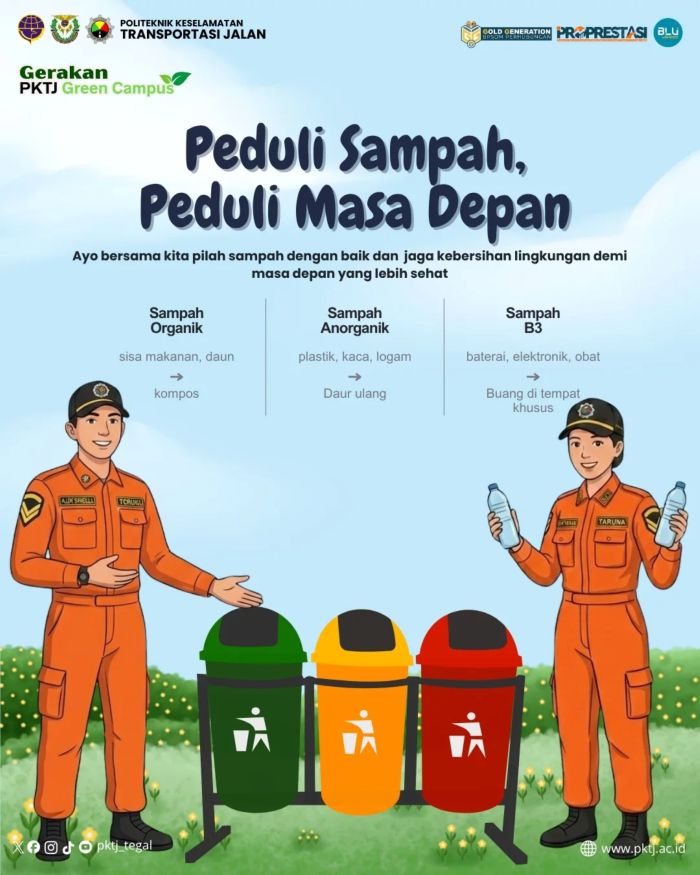 |
Pengelolaan sampah berbasis 3R (Reduce, Reuse, Recycle) untuk mengurangi timbunan, mewujudkan kampus yang bersih dan minim risiko.
|
- 3R (Reduce, Reuse, Recycle) program for university waste : 3R program > 75% implemented
- Total volume of paper and plastic produced this year : 0.17
- Total volume of paper and plastic produced last year : 0.23
- Program to reduce the use of paper and plastic on campus : 4 - 6 programs
- Total volume organic waste produced this year : 184
- Total volume organic waste produced last year : 200
- Total volume organic waste treated this year : 184
- Organic waste treatment : Partial, (> 65 - 85% treated)
- Total volume inorganic waste produced this year : 76.8
- Total volume inorganic waste produced last year : 81.6
- Total volume inorganic waste treated this year : 14
- Inorganic waste treatment : Extensive, (> 85% treated)
- Total volume toxic waste produced this year : 0.58
- Total volume toxic waste produced last year : 0.66
- Total volume toxic waste treated this year : 0.5
- Toxic waste treatment : Extensive, (> 85% treated) or campus produces a minimum amount of toxic waste
- Sewage disposal : Treated with primary treatment
- Impact of Waste Management programs in supporting the Sustainable Development Goals (SDGs) : Significant impact (supporting 6–9 SDGs)
|
Water
|
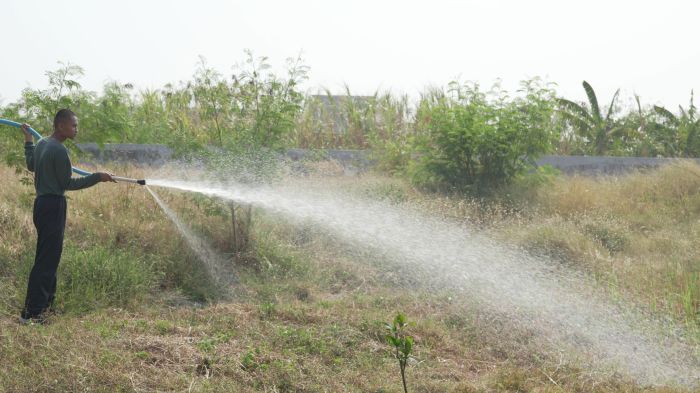 |
Pengelolaan sumber daya air secara efisien melalui konservasi air, penyerapan air hujan, dan teknologi hemat air.
|
- Total area on campus for water absorption, excluding forest and planted vegetation areas. Please provide the total area in square meters : >40%
- Water conservation program and implementation : > 25 - 50% water conserved
- Water recycling program implementation : > 25 - 50% water recycled
- Use of water-efficient appliances : > 80% of water efficient appliances installed
- Consumption of treated water : > 25% - 50% treated water consumed
- Water pollution control in the campus area : Policy and programs for water pollution control are fully implemented and monitored periodically
- Impact of Water Management programs in supporting the Sustainable Development Goals (SDGs) : Significant impact (supporting 6–9 SDGs)
|
Transportation
|
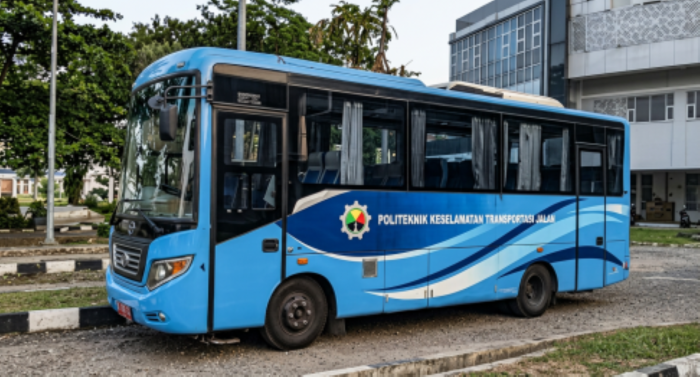 |
Pengembangan sistem transportasi kampus yang aman, ramah lingkungan, dan mendukung pengurangan emisi karbon.
|
- Number of cars actively used and managed by the university : 26
- Number of cars entering the university daily : 7
- Number of motorcycles entering the university daily : 56
- The total number of vehicles (cars and motorcycles with combustion engines) divided by the total campus population : (5.1+5.2+5.3)/(1.11+1.13)
- Shuttle services : Shuttle service is provided by the university, regular, and free of charge
- Number of shuttles operated in your university : 5
- Average number of passengers of each shuttle : 20
- Total trips of shuttle services each day : 2
- Zero-Emission Vehicles (ZEV) policy on campus : Zero Emission Vehicles are available, and provided by university for free
- Average number of Zero Emission Vehicles (e.g. bicycles, canoe, snowboard, electric car, etc.) on campus per day : 19
- The total number of Zero Emission Vehicles (ZEV) divided by total campus population : ((5.10)/(1.11+1.13))
- Ratio of ground parking area to total campus area (m2) : 450
- Ratio of parking area to total campus area : ((5.12/1.5) x 100%)
- Program to limit or reduce parking area on campus over the last three years : Less than 10% decrease
- Number of initiatives to reduce private vehicles on campus : 3 initiatives
- Pedestrian paths on campus : Pedestrian paths are available, designed for safety, convenience, and in some parts provided with disabled-friendly features
- Approximate daily travel distance of a vehicle inside campus only (in Kilometers) : 0.26
- Impact of Transportation programs in supporting the Sustainable Development Goals (SDGs) : High impact (supporting 10–13 SDGs)
|
Education & Research
|
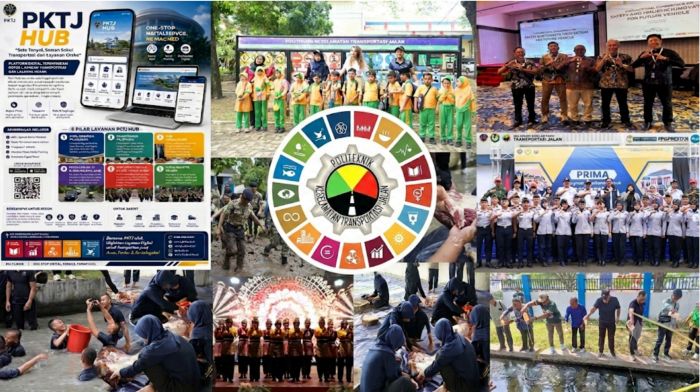 |
Penguatan pendidikan, penelitian, dan pengabdian masyarakat yang mendukung tujuan pembangunan berkelanjutan.
|
- Total number of sustainability-related study programs offered : 113
- Total number of courses/subjects offered : 152
- Total number of study program related to sustainability offered : 3
- The ratio of sustainability courses to total courses/subjects : ((6.1/6.2) x 100%)
- Total research funds dedicated to sustainability research (in US Dollars) (average per annum for the last three years) : 17427
- Total research funds (in US Dollars) (average per annum for the last three years) : 27003
- The ratio of sustainability research funding to total research funding : ((6.5/6.6) x 100%)
- Number of lecturers and researchers on campus in one year period : 39
- Number of scholarly publications on sustainability in a one-year period : 125
- Ratio of scholarly publications on sustainability to lecturers and researchers on campus in one year period : (6.9/6.8)
- Number of events related to sustainability, averaged annually over the past three years : 31
- Number of activities organized by student organizations related to sustainability per year : 29
- Number of cultural activities on campus : 16
- Number of university sustainability program(s) with international collaborations : 4
- Number of sustainability-related community service projects involving students : 13
- Number of sustainability-related start-ups : 11
- Total number of graduates with green jobs (for the last three years) : 504
- Total number of graduates (for the last three years) : 737
- Percentage of graduates with green jobs : ((6.17/6.18) x 100%)
- Impact of Education and Research programs in supporting the Sustainable Development Goals (SDGs) : High impact (supporting 10–13 SDGs)
|
Governance & Digitalization
|
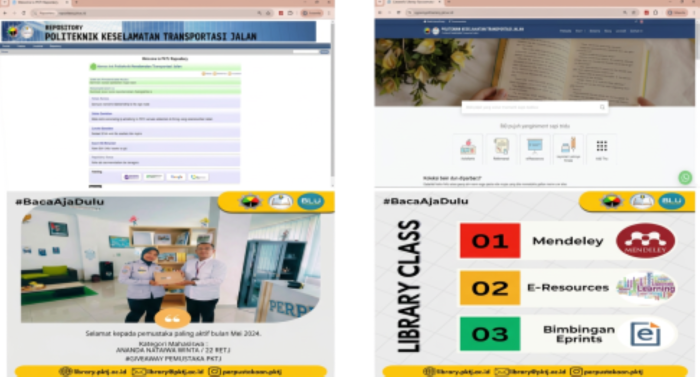 |
Tata kelola kampus yang transparan, akuntabel, serta pemanfaatan teknologi digital untuk mendukung keberlanjutan institusi.
|
- Total university budget (USD) : 5054461.25
- University budget for sustainability efforts (USD) : 820377.23
- Percentage of University's budget for sustainability effort : ((7.2/7.1) x 100%)
- University-run sustainability website : Website is available, accessible, and updated occasionally
- Sustainability website address (URL) if available : https://pktj.ac.id/tentang/123-green-metric-pktj
- Sustainability report : Available but not publicly accessible
- Sustainability report link address (URL) if available : https://pktj.ac.id/tentang/127-reports
- Financial report : Available but not publicly accessible
- Financial report link address (URL) if available : https://pktj.ac.id/tentang/127-reports
- Availability of a unit or office that coordinates sustainability on campus : Unit(s) or office(s) with university leader decree of establishment, structure and duties has been operational
- Number of dedicated staff members assigned to the unit or office responsible for coordinating sustainability initiatives on campus : 46
- Use of Information and Communication Technology (ICT) for sustainability program planning, implementation, monitoring, and evaluation : Program has been implemented and evaluated
- Policy of advanced digital technologies usage, such as Artificial Intelligence and Internet of Things, to support decision-making, operational efficiency, and service delivery across university administrative and academic business processes : Initial adoption of policy. Limited policy implementation in specific units
- Compliance with the General Data Protection Regulation (GDPR) or Equivalent National Data Protection Regulations : Compliance is partially implemented, with policies in place but limited enforcement or coverage
- Total number of institutional leaders and deputy leaders at university, faculty, study program, and university-level units : 17
- Number of female leaders in leadership positions at university, faculty, study program, and university-level units : 4
- Ratio of Female Leaders to Total Institutional Leaders : (7.16/7.15) x 100%
- Anti-Corruption and Integrity System of the University : The anti-corruption and integrity system has been implemented and evaluated
- Whistleblowing and complaint system of the university : Whistleblowing and complaint system has been implemented and evaluated
- LMS-enabled digital literacy program for students and staff : Program has been implemented and evaluated
- Written code of ethics that applies to university leaders, academic staff, administrative staff, and students : A written Code of Ethics applies to all groups, is fully implemented, regularly reviewed, and actively enforced through institutional mechanisms.
|

